


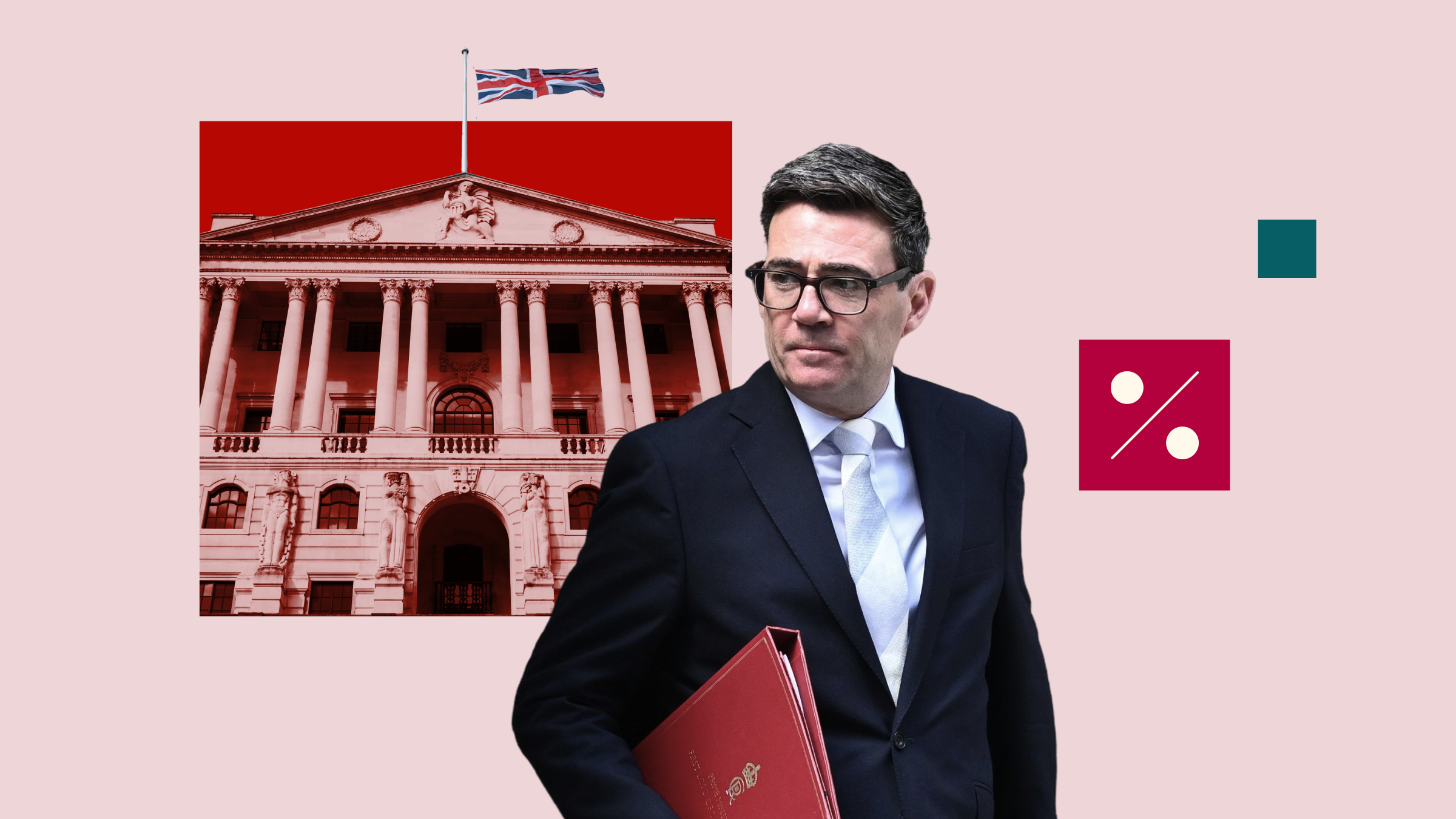
UK stocks retreated last week after fresh UK inflation data and AI-focused stock market volatility in the US. A surge in the oil price also hit investor sentiment. Bond yields inched higher, with the 10-year gilt yielding 5.35% and 30-year yielding 5.72%, but these were below levels seen at the start of October.
This week’s markets brief looks at the implications of the budget for markets, the latest UK earnings, the UK’s ballooning national debt, and the week’s corporate agenda.
What Could the Biggest Budget Surprise Be?
This week’s Autumn Budget is shaping up to be a low-key affair, according to economists who are expecting Chancellor John Healey to stick to the fiscal rules imposed by predecessor Rachel Reeves.
But budget day is often known for its surprises. As Healey juggles with narrowing fiscal headroom, what could the main market-moving shocks be?
At a briefing in London, ING developed markets economist James Smith said a major surprise could be if the fiscal headroom shrinks by less than feared. This would allow for greater spending without the need for major tax increases.
The widespread expectation is that the fiscal headroom, which is the buffer the government has before it breaks its rules on borrowing, has shrunk. An estimate from EY at the start of October suggests the fiscal headroom has halved since March, down to £11.3 billion from £23.6 billion.
“The vibe from the Treasury suggests the chancellor would prefer it to be above £15bn, to give more breathing space in case of future adverse forecast revisions. That would point to some limited tax hikes,” says ING’s Smith. However, he says a positive surprise would be if the Office for Budget Responsibility’s assessment finds there is more room for maneuver than expected, which happened at last year’s budget.
“The truth is, nobody really knows how the OBR will change its assessment of the UK economy. And as we saw last year, the Treasury is often inclined to talk up the doom and gloom to open up a positive surprise on the day,” he says.
Given Healey’s previous role as defense minister, a post he resigned amid an argument over a lack of spending, a major pledge on defense spending has been mooted as another potential policy surprise.
Stocks tied to defense would likely rally on such an announcement, but ING economist James Smith says a major pledge on defense spending would be difficult within the current fiscal rules. Bond yields could also rise on the announcement of major increases to government spending.
“It’s hard to see how they could do it without cutting back in other areas of investment,” says Smith.
Is the Budget Leading to a General Election?
Schroders fixed income strategist James Bilson says significant policy changes are unlikely, which should be well received by the gilt market.
“We expect the budget to be a fairly quiet affair, with microeconomic tweaks—reducing business red tape and some minor tax changes—but leaving the overall macro framework largely unchanged,” he says. “Given the building concerns about sovereign fiscal outlooks, a quiet budget would largely be seen as prudent and successful.”
However, a “boring” Budget could lead to an even bigger surprise in the form of an early general election. ING’s Smith says it is hard to square a modest budget against prime minister Andy Burnham’s “bold” ambitions, which cover expensive policies such as nationalization and social care.
“Unless, that is, the government is quietly laying the groundwork for an early election in 2027,” notes Smith. “I think all roads increasingly lead in that direction. And it suggests prediction markets, which put the probability of a vote by mid next year at just 25%, are underpricing that risk.”
AI Adoption Drives Data Stocks
All eyes may be on the budget, but earnings season is also in full swing. AI adoption has continued to dominate earnings, and last week’s reports saw stocks previously deemed “AI losers” post strong results, including London Stock Exchange Group LSEG and analytics company RELX REL. Both stocks were caught up in the wider software selloff in February on the back of fears AI would disrupt the business models of data and software stocks.
Following LSEG’s third-quarter update, Morningstar analyst Niklas Kammer says his view is that the quality of LSEG’s data will increase in value as AI adoption picks up. “Early signs in adoption are encouraging, but the magnitude and timing of artificial intelligence-related revenue remain vague,” he says.
Meanwhile, Morningstar analyst Rob Hales says RELX continues to deliver consistent results despite market fears of artificial intelligence disruption. “Ironically, legal, the business seen as most vulnerable to AI, is proving to be its biggest beneficiary,” he adds.
LSEG shares were up 7% in the day’s trading following results, while RELX rose 2%. LSEG also announced a USD3.5 billion deal for private credit data provider Octus.
AI has also been a key theme among bank earnings too. Last week, Barclays BARC announced 5,000 job cuts as it aims for further productivity gains from AI. Barclays is the only UK bank stock to fall this year.
Elsewhere, Rentokil RTO shares rallied 8% following a positive update as revenue continues to recover following its acquisition of pest control firm Terminix.
A less positive update came from supermarket Sainsbury’s SBRY, with results coming in below expectations as sales decelerated in the second quarter.
“We expect consumer challenges, including higher fuel prices, to persist in the third quarter and the UK grocery market to remain competitive,” says Morningstar analyst Verushka Shetty.
Just How Bad is The UK’s Debt Pile?
Analysts and economists got their final bits of UK economic data last week ahead of Chancellor John Healey’s Autumn Budget on Wednesday. Among them, news that the Consumer Prices Index has risen a further 0.4 percentage points to 3.5%, putting further pressure on the Bank of England to raise rates at its next meeting in November. Other figures made the headlines, however.
The UK’s public sector net debt—often referred to as the UK’s “national debt”—hit the £3 trillion mark for the first time in September. Last month alone, the UK government spent £10.9 billion on debt interest, underlying the challenge of funding its own spending plans in a higher interest rate environment. It’s taken just over six years for the UK to reach the £3 trillion mark, after it first exceeded the £2 trillion mark in the covid pandemic in June 2020. Further back, the UK hit the £1 trillion debt mark in February 2010, in the wake of the global financial crisis and in the final days of Gordon Brown’s Labour government.
Headline numbers are not the only part of the equation, however. Two other factors should be considered, says Michael Diamantopoulos, associate director for fixed income and currency at Morningstar. The first is affordability, as measured by debt interest payments as a percentage of revenue.
“This exposes the trade-off at the heart of fiscal policy: every pound spent servicing government debt is money stripped directly from the quality and depth of public services provided to citizens. According to our estimates, this ratio is expected to reach 11% for the UK in 2026, a sharp increase from just 4% a decade ago,” he says.
The second—known as “required fiscal effort”— represents the adjustment in a government’s primary balance as a percentage of gross domestic product needed to stabilize its debt-to-GDP ratio at its 2026. For the UK, where debt to GDP is expected to reach 105% this year, an adjustment of 2% of GDP is required, Diamantopoulos says.
“While significant, this is smaller than what we estimate for other heavily indebted major economies, such as France at 3% of GDP.”
UK Large-Cap Stocks in Focus for Earnings
The coming week brings a fresh round of earnings from some of the UK’s largest companies. HSBC HSBA, and Reckitt RKT kick off the week on Tuesday, Oct. 27.
On budget day, GSK GSK, Standard Chartered STAN, Unilever ULVR and Intertek ITRK all post third-quarter updates.
Shell SHEL, Lloyds LLOY, and Glencore GLEN are among a raft of updates on Oct. 29, before BP BP., AstraZeneca AZN, and NatWest NWG report on Friday, Oct. 30.
