

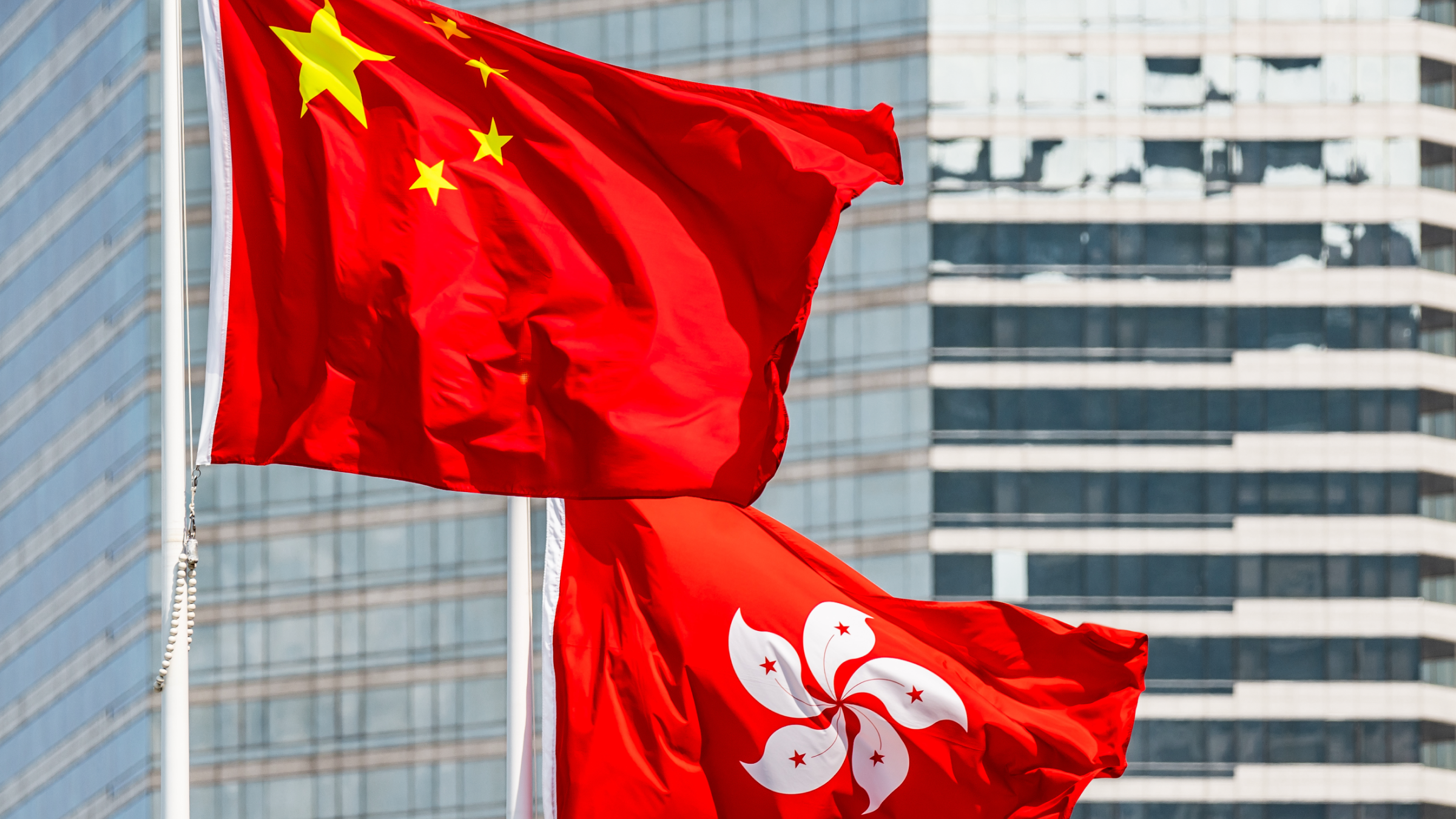
Asian equities have outperformed US and European markets this year as investors have looked further afield for potential winners from the AI trade.
What Are Asia ex-Japan Equity Funds?
Asia ex-Japan equity funds invest throughout Asia, but generally exclude Australia, New Zealand, and Japan.
The 4 Best Asia ex-Japan Equity Funds to Buy in 2026
To find the best Asia ex-Japan equity funds to buy, we screened for the lowest-cost primary share classes earning a
- Federated Hermes Asia ex-Japan Equity Fund
- Fidelity Asia Fund
- Invesco Funds - Invesco Asian Equity Fund
- Schroder Asian Alpha Plus Fund
Because the screen was created with the lowest-cost share class for each fund, some may be listed with share classes that are not accessible to individual investors, or they may be aimed at institutional investors and require large minimum investments. The individual investor versions of those funds may carry higher fees, reducing returns to shareholders. Medalist Ratings may differ among the share classes of a fund.
Morningstar expects the highly rated Asia ex-Japan equity funds on this list to outperform their peers over a full market cycle. But even though all the funds on our list fall into the same category, they may practice different strategies, and therefore behave differently from each other. Investors need to do some homework to understand exactly what a particular fund invests in before buying.
Here’s a quick look at each of the best Asia ex-Japan equity funds. Be sure to review a fund’s complete report for more details.
Federated Hermes Asia ex-Japan Equity Fund
- : £4.6 billionFund Size
- : GoldMorningstar Medalist Rating
- Ongoing Charge: 0.83%
The Federated Hermes Asia ex-Japan Equity Fund has been managed by Jonathan Pines since the fund’s inception in December 2012. The fund’s management earns an Above Average rating from Morningstar. Parent company Federated Hermes earns a rating of Average.
The £4.6 billion fund has gained 20.23% over the past year, while the average fund in its category is up 33.84%. The Federated Hermes fund, which launched in December 2012, has climbed 18.90% over the past three years and gained 10.81% over the past five years.
Federated Hermes Asia ex-Japan offers a compelling option for investors seeking value-oriented Asian equity exposure. The strategy benefits from a well-structured process, aiming to identify attractively priced companies, and it has been well-executed for more than a decade by an experienced lead manager and team. As a result, the People Pillar is rated Above Average, and the Process Pillar is rated High.
Jonathan Pines has been in place since launch in 2010. He brings over two decades of experience, the majority of it investing in Asia and with a similarly contrarian strategy. Pines shows strong knowledge of the universe and a clear ability to value companies well. His deputy Sandy Pei has worked alongside him since 2013 (and previously in 2009-11 on the global emerging-markets strategy). We have a strongly positive view of Pines; his experience and judgment are key to our conviction. While the analyst team of three (including one environmental, social, and governance analyst) is not the largest in the space, Pines has always worked with a lean team, and the concentrated portfolio and screen-driven nature of idea generation mean that less manpower is required.
Michael Born, analyst
Read Morningstar’s full report on the Federated Hermes Asia ex-Japan Equity Fund.
Fidelity Asia Fund
- : £3.1 billionFund Size
- : SilverMorningstar Medalist Rating
- Ongoing Charge: 0.93%
The fund’s management earns an Above Average rating from Morningstar. Parent company Fidelity International earns a rating of Above Average.
Over the past year, the Fidelity International fund rose 52.37%, while the average fund in its category rose 33.84%. The fund, which launched in October 2012, has climbed 25.28% over the past three years and gained 10.64% over the past five years.
Backed by a tenured and capable portfolio manager, robust analytical resources, and a proven investment process, Fidelity Asia remains an appealing choice for Asia ex-Japan equities.
Teera Chanpongsang has led this strategy since January 2014. His investment career began at Fidelity in 1994, and he has built a commendable track record across multiple Asian strategies, including Fidelity Thailand, Fidelity India Focus, and Fidelity Emerging Asia.
The bottom-up investment approach targets companies trading below their intrinsic values with strong business models, quality-management teams, and prudent accounting policies. Portfolio metrics such as net profit margin and return on equity have trended above those of the MSCI AC Asia ex Japan Index for most of Chanpongsang’s tenure, reflecting his quality focus, while annual turnover has consistently averaged less than 20%, reflective of his long-term investment horizon. The number of holdings dropped from the mid-80s in early 2021 to the low 60s in early 2024, but has since climbed back to the mid-70s in the first half of 2026 as Chanpongsang found more investment opportunities in Greater China technology stocks.
Hunter Beaudoin, analyst
Read Morningstar’s full report on the Fidelity Asia Fund.
Invesco Funds - Invesco Asian Equity Fund
- : £2.8 billionFund Size
- : GoldMorningstar Medalist Rating
- Ongoing Charge: 0.72%
Morningstar assigns an Above Average rating to the Invesco Funds - Invesco Asian Equity Fund management team and an Average rating to its parent company Invesco. The management team has an average of around four years with the fund while Ian Hargreaves, the longest-tenured member of the team, has been with the fund for eight years.
The £2.8 billion fund has gained 26.96% over the past year, while the average fund in its category is up 33.84%. The Invesco fund, which launched in August 2021, has climbed 18.27% over the past three years and gained 11.47% over the past five years.
Invesco Asian Equity has strong features, including an experienced portfolio manager within a collegiate team structure and a truly active approach. The People and Process scores have been maintained at Above Average and High, respectively.
The fund is managed by Ian Hargreaves, who has been in charge here since October 2018, when he took over from Stuart Parks following his retirement. Hargreaves also successfully managed the Asian investment trust from March 2011 until May 2024, when Fiona Yang became the lead manager.
The approach is unconstrained, seeking to unearth companies that are trading at a significant discount to the team’s estimate of fair value—a core principle of the investment approach. Fundamental research is rigorous and multifaceted, with a strong emphasis on financial analysis, including balance sheet strength, profitability, and cash flow dynamics. Qualitative factors are equally important, such as the quality of a company’s products or services, key risks, and the presence of any unique characteristics or tangible advantages over competitors.
Overall, we believe the fund’s high-conviction approach with a focus on valuation discipline should help the strategy to outperform over the cycle. The long-term track record is strong over Hargreaves’ tenure.
Lena Tsymbaluk, associate director
Read Morningstar’s full report on the Invesco Funds - Invesco Asian Equity Fund.
Schroder Asian Alpha Plus Fund
- : £1.7 billionFund Size
- : GoldMorningstar Medalist Rating
- Ongoing Charge: 0.45%
The fund’s management earns an Above Average rating from Morningstar. Parent company Schroders earns a rating of Above Average.
The £1.7 billion fund was launched in February 2026.
Schroder Asian Alpha Plus continues to have strong features, such as Richard Sennitt’s experience in managing Asian equities, solid analyst resources, and a robust underlying framework. This keeps the People and Process Pillar ratings at Above Average.
The approach, which is quality growth at the right price, focuses on sustainable or improving returns, balance-sheet strength, efficient capital allocation, strong management and governance, and valuation support. Since taking over, the managers have maintained a well-diversified portfolio without any major bias toward growth or value styles. They have remained invested in those stocks geared to the secular growth trends in the region.
Investors should be aware of the strategy’s large underweight in China, which, as of October 2025, was 26% of the portfolio versus 35% in the MSCI AC Asia ex Japan Index. The team was more positive on Hong Kong, where they believed valuations were lower.
Given the quality-growth approach, performance here is likely to be more reliant on stylistic factors and lag during momentum-driven and value rallies, such as 2022 and 2023. We believe the balanced approach should help the strategy to outperform over the cycle.
Lena Tsymbaluk, associate director
Read Morningstar’s full report on the Schroder Asian Alpha Plus Fund.
