


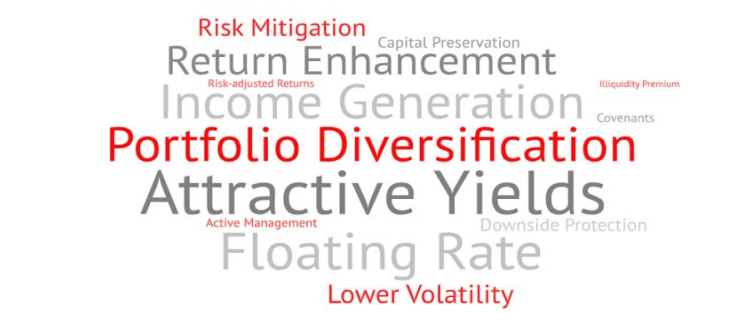
Private credit funds have continued to gain traction among a broader range of investors, often supported by aggressive marketing. While the sales pitches may be slick, investors should nonetheless tread with caution. Using generative artificial intelligence tools to review marketing materials from private credit funds, we identified several recurring themes, as shown in Exhibit 1. In this article, we examine whether these commonly promoted narratives hold up under closer scrutiny.
Exhibit 1:Marketing Claims Frequently Highlighted by Private Credit Funds
Claim 1: Private Credit Has Lower Volatility
Lower volatility is a frequently cited reason for investing in private credit. However, this is illusory; it is the lack of trading and limited price discovery in these instruments that creates low dispersion. The true volatility of any financial instrument can only be assessed in an active secondary market where participants continuously express their views and reprice risk. Without such market activity, private credit may appear more stable than it truly is—a phenomenon that’s earned the moniker “volatility laundering.”
For example, during the tariff–driven market volatility in April 2025, which unsettled both equities and fixed-income securities in public markets, it would be difficult to argue that private credit issuers were immune to the same economic headwinds affecting their publicly traded peers. In reality, the underlying volatility in private credit is likely comparable to that of similar asset classes such as high-yield bonds.
Claim 2: Private Credit Is Lower Risk Than High Yield
Lower risk in private credit is another claim that tends to be marketed, even though most private credit issuers fall into the below-investment-grade or nonrated categories. These securities also tend to offer higher coupons. If the risk were truly lower, issuers would not need to offer such high coupons to attract investors. Proponents would argue that private credit funds provide faster and more flexible financing, or have skill in pricing more complex credit risks, and that borrowers are willing to pay a premium for this. This may hold true in some cases. Nonetheless, issuers ultimately aim to raise capital at the lowest possible cost, so higher rates largely reflect higher perceived risk, contrary to the original claim.
Indeed, the recent bankruptcy of automotive supplier First Brands, which led to a sharp drop in the company’s loan prices, highlights that private credit is not immune to credit risks, much like its publicly traded counterparts.
To learn more about other commonly promoted claims surrounding private credit, read our full report: Debunking Myths in Private Credit https://www.morningstar.com/en-hk/business/insights/research/debunking-private-credit-myths
